



Running a business these days means juggling a lot, especially when it comes to managing your team. Between handling salaries, tracking leave, keeping employee records, and making sure everything’s compliant with the law, it can get overwhelming pretty quickly.
That’s where digital tools come in handy. You might have heard of payroll systems and HRM systems, and maybe you’re wondering: Aren’t they the same thing? Or do I need both?
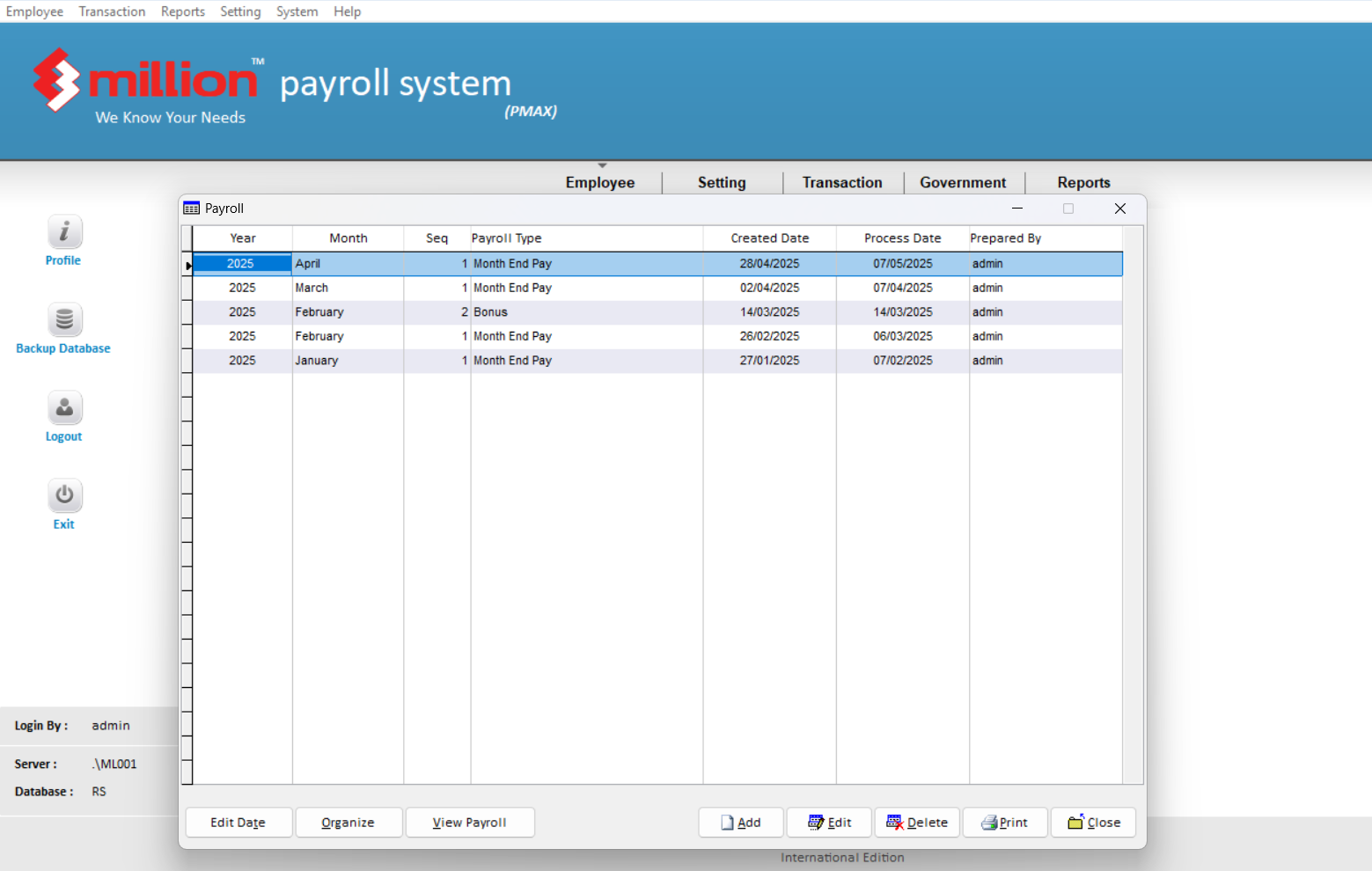
What is a Payroll System?
Payroll software is like your company’s automatic pay calculator. It’s designed to make sure everyone gets paid the right amount, on time, every time. It handles everything from your basic salary to overtime, bonuses, and those tricky statutory deductions you have to keep track of — like EPF, SOCSO, EIS, and tax deductions (PCB).
Here’s what a payroll system typically does:
- Calculates salaries, overtime, commissions, and bonuses.
- Takes care of deductions for EPF, SOCSO, and taxes.
- Generates payslips so employees know exactly what they’re getting.
- Produces reports for audits, banks, and tax authorities.
- Handles year-end tax forms like EA Form and CP8D.
If you’re a small business just getting started, a payroll system like Million Payroll can be a lifesaver. It keeps everything running smoothly without you having to get into the nitty-gritty of calculations yourself.
What is an HRM System?
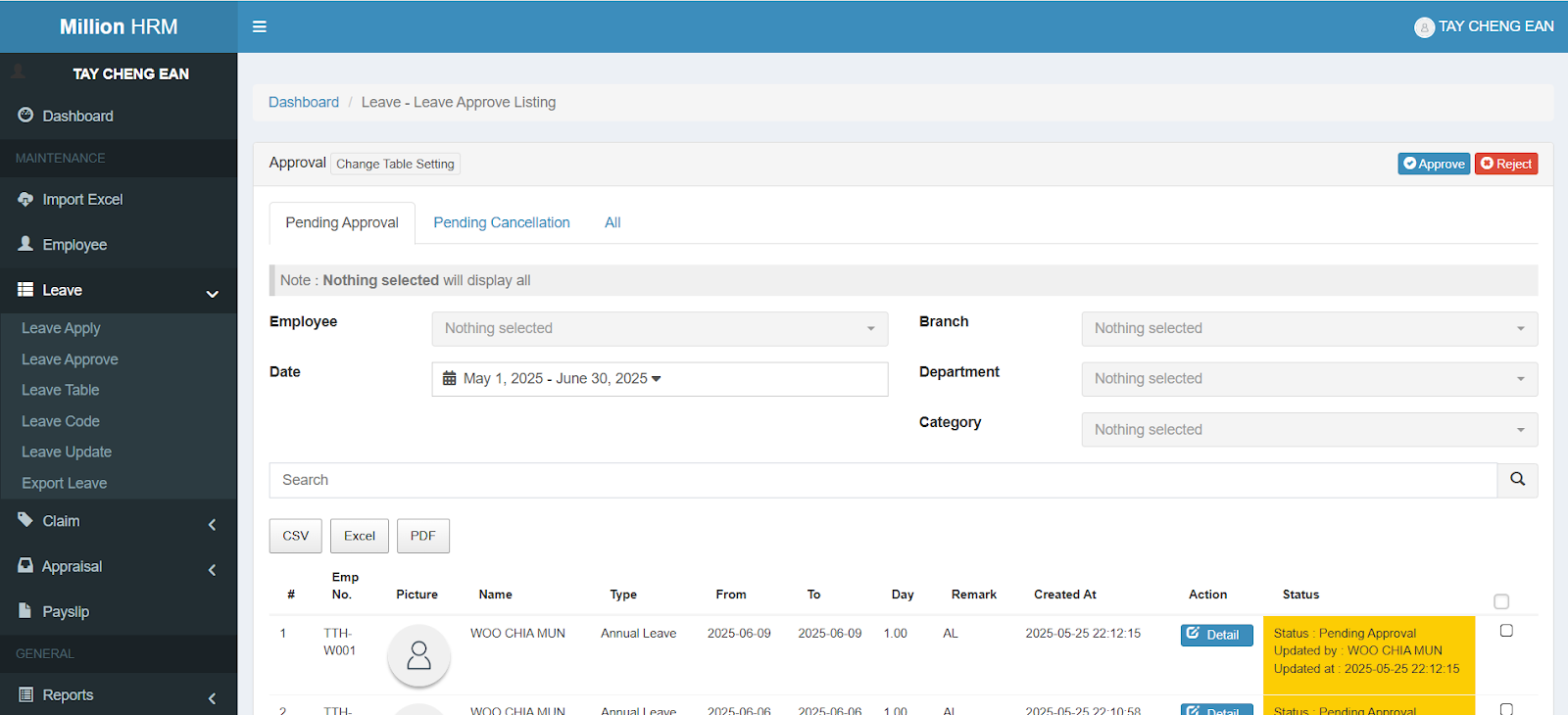
Now, an HRM (Human Resource Management) system is a bit broader. It’s like your company’s personal assistant for everything related to your employees — not just paying them, but managing their entire work life.
An HRM system helps with:
- Keeping detailed records of employee info — think personal details, job history, certifications, and more.
- Managing leave applications and approvals, and tracking who’s off and when.
- Tracking attendance and working hours.
- Handling performance reviews and training records.
- Sharing company news, memos, and HR letters.
- Managing claims like medical or travel reimbursements.
Basically, HRM systems like Million HRM help your HR team handle all the behind-the-scenes stuff that keeps your employees happy, organized, and productive.
Key Differences at a Glance with Million Payroll & Million HRM
Let’s look at a quick comparison to see how Million Payroll and Million HRM stack up:
| FEATURE/FUNCTION | MILLION PAYROLL | MILLION HRM |
| Salary & Statutory Calculation | ✅ Yes | ❌ No |
| Payslip Generation | ✅ Yes | ❌ No |
| EPF/SOCSO/PCB Reports | ✅ Yes | ❌ No |
| Employee Database | ✅ Yes; Basic (for payroll purposes) | ✅ Yes (more detailed and HR-focused) |
| Leave Management | ❌ No | ✅ Yes |
| Time & Attendance Tracking | ❌ No | ✅ Yes |
| Appraisal | ❌ No | ✅ Yes |
| Integration | Can integrate with Million HRM | Can integrate with Million Payroll |
Why Integration Between Payroll and HRM Matters
One big reason many companies use both systems is integration. When your payroll and HRM systems talk to each other, it cuts down on double entry and human error.
Imagine this: An employee applies for leave, and that automatically updates their attendance records. Then, when payroll runs, it knows exactly how many days to deduct without you manually checking or inputting the data. This saves time and avoids mistakes that could upset your team.
Plus, when HRM and payroll share data seamlessly, you get better insights, such as spotting attendance trends or quickly running compliance reports. This kind of connected system gives managers more confidence in their decisions.
Who Benefits Most from Million Payroll and Million HRM?
While any business can benefit, here’s a rough idea of who should consider each system:
- Million Payroll: Ideal for small businesses or startups that mainly need a reliable, easy-to-use way to calculate and process salaries with compliance.
- Million HRM: Great for medium to large businesses, or any company that needs to manage leaves, attendance, training, appraisals, and claims in addition to payroll.
- Both Together: For growing companies that want everything to sync perfectly, avoid duplication, and maintain accurate records across payroll and HR processes.
Common Challenges Without Payroll and HRM Systems — And How These Tools Help
Many businesses try to manage payroll and HR tasks manually or with basic spreadsheets, but that can quickly lead to headaches.
Here are some common issues companies face without dedicated payroll and HRM software, and how Million Payroll and Million HRM can make a difference:
1. Errors in Salary Calculation
Manual payroll calculations can lead to mistakes, like missing overtime pay, incorrect tax deductions, or forgetting bonuses. These errors not only frustrate employees but can also cause legal problems.
How Million Payroll helps: It automates salary computations and statutory deductions, drastically reducing errors and ensuring compliance with Malaysian regulations like EPF and SOCSO.
2. Time-Consuming Data Entry
Entering employee details, leave records, and attendance data repeatedly wastes valuable time and increases the risk of inconsistencies.
How Million HRM helps: It stores all employee information in one place and automatically updates leave and attendance records, cutting down on repetitive tasks.
3. Difficulty Tracking Leave and Attendance
Without a proper system, keeping track of who’s on leave, how many days are left, and attendance irregularities can be a nightmare, leading to disputes and unhappy employees.
How Million HRM software helps: Its leave management and attendance tracking features keep everything organized and transparent, making it easy for both HR and employees to stay informed.
4. Lack of Integration Between HR and Payroll
When HR and payroll systems don’t communicate, payroll staff have to manually update salary information based on attendance and leave data, leading to duplicated work and potential mistakes.
How Million Payroll and Million HRM integration helps: By syncing data automatically, both teams work from the same information, saving time and improving accuracy.
5. Inadequate Reporting and Compliance
Generating reports for audits, tax authorities, or management can be slow and prone to error when done manually.
How Million Payroll software helps: It generates detailed and compliant reports with just a few clicks, making audits and tax submissions hassle-free.
Addressing these challenges with the right tools can save time, reduce errors, improve employee satisfaction, and focus more on growth rather than paperwork.
How to Choose the Right System for Your Business
Choosing the right software depends on your company’s size, needs, and future plans. Here are some questions to consider:
- How many employees do you have, and how complex are their pay structures?
- Do you need to track attendance and manage leave requests efficiently?
- How much time does your HR team spend on manual data entry or fixing payroll errors?
- Are you looking for software that grows with you as your business scales?
If you’re unsure, it’s often a good idea to start with payroll and gradually add HRM features or systems as your needs evolve. The beauty of Million Payroll and Million HRM is that they integrate easily, making that transition smooth.
Tips for Getting the Most Out of Payroll and HRM Software
To maximize the benefits of these systems, keep these tips in mind:
- Train your team: Make sure HR staff and payroll officers understand how to use both systems properly.
- Keep data clean: Regularly update employee information to avoid errors.
- Leverage automation: Use features like automatic leave approvals and payroll runs to reduce manual work.
- Review reports regularly: Use the insights from payroll and HR reports to spot issues early and improve processes.
- Communicate with employees: Let your team know how they can access payslips, leave balances, and other HR information — it builds trust and transparency.
Final Thoughts: Simplify HR and Payroll for a Happier Workplace
At the end of the day, managing payroll and HR well isn’t just about compliance or saving time — it’s about creating a workplace where employees feel valued and everything runs smoothly behind the scenes.
Whether you choose Million Payroll, Million HRM, or both, the right tools can take the pressure off your HR and finance teams, so they can focus on what really matters: supporting your people and growing your business.